
Olympic gold medallist Abhinav Bindra has called for greater transparency and fairness in the electoral processes of India's sports governance system, highlighting an inconsistency between the Indian Olympic Association (IOA) Constitution and the rules followed during recent Sportspersons of Merit (SOM) elections.

The Supreme Court will hear a batch of pleas on December 9, including one by Congress leader Rahul Gandhi and other INDIA bloc leaders, alleging widespread voter deletions and irregularities in the special intensive revision (SIR) of electoral rolls. The petitioners seek to question the Election Commission on its decision-making process, particularly regarding whether SIR decisions were collective or unilateral, and modifications to online registration systems. The EC has defended its actions, stating that decisions were unanimous and no changes were made to statutory forms.

Former Indian Olympic Association President Narinder Batra has raised objections regarding the nomination process by Hockey India for its representatives to the IOA General Assembly ahead of the December 5 polls. Batra alleges a lack of transparency, stating that no formal Executive Committee meeting was held for approval and that the selection process appeared restricted to predetermined names. He also questioned the nominations of current IOA President PT Usha and Executive Committee member Harpal Singh from other sports bodies, requesting verification of their memberships and the legal status of their nominating associations.

Congress president Mallikarjun Kharge has called for the immediate removal of Chief Election Commissioner Gyanesh Kumar and demanded Prime Minister Narendra Modi's resignation, citing alleged irregularities in electoral rolls and the poll process. Kharge outlined five key demands for electoral transparency and pledged that the Congress party would protest both on the streets and in Parliament.
The Election Commission has informed the Supreme Court that over 37 lakh appeals concerning deletions or inclusions in West Bengal's electoral rolls remain pending under the Special Intensive Revision. The apex court-appointed tribunals have disposed of only a fraction of the 38.20 lakh appeals filed, prompting the Supreme Court to seek data and a plan for streamlining the adjudication process.
Bengaluru's electorate has significantly decreased by 43.13% to 59.08 lakh after the Special Intensive Revision (SIR) process and the publication of the final electoral roll on October 27. This reduction is largely due to deletions under the ASDDO category (Absent, Shifted, Dead, Duplicate, Others), with Bengaluru South and Mahadevapura seeing the highest number of removals. Despite the deletions, the Chief Electoral Officer assured that no eligible voter was removed and the process was transparent.

The Supreme Court has agreed to hear a plea seeking the removal of social media videos featuring Italian politician Giacomo Filibeck. Filibeck is accused of interfering in India's domestic political affairs by allegedly raising the slogan "Vote Chor, Gaddi Chhod" and criticising the government while praising the opposition at the Bharat Summit in Hyderabad.

The Cockroach Janta Party (CJP) is continuing its protests against alleged electoral roll irregularities, demanding the resignation of Chief Election Commissioner Gyanesh Kumar. Despite detentions and police restrictions on Saturday, the CJP announced another demonstration at Jantar Mantar on Sunday. The party condemned the detention of its leaders and other protesters, alleging an "undeclared Emergency" and questioning the whereabouts of its founder and co-convenors. Opposition parties and civil society groups have expressed solidarity, vowing to continue the campaign for electoral transparency.

Thousands of young men and women, joined by prominent personalities, protested at Shivaji Park in Mumbai, demanding the resignation of Chief Election Commissioner Gyanesh Kumar despite police denial of permission. Organised by the Cockroach Janta Party (CJP), the agitation highlighted concerns over transparency in CEC appointments and alleged irregularities in electoral roll revisions.

An Italian political leader's criticism of India's ruling BJP at a recent event in Hyderabad has sparked controversy in Italy. Giacomo Filibeck, Secretary General of the Party of European Socialists, supported Rahul Gandhi's campaign against alleged electoral irregularities, drawing sharp rebuke from Deborah Bergamini of Italy's ruling Forza Italia party, who deemed it "inappropriate" to interfere in a friendly nation's internal political affairs.

Several political parties in Tamil Nadu, including the ruling TVK and opposition DMK, walked out of an all-party meeting convened by the Election Commission. They demanded the resignation of Chief Election Commissioner Gyanesh Kumar, citing alleged irregularities and a lack of transparency in the previous Special Intensive Revision of electoral rolls, where millions of voters were reportedly removed or flagged. The AIADMK and BJP attended the meeting, with AIADMK also raising concerns about the large number of affected voters.

Ladakh representatives express apprehension over the timing of hill council elections, alleging it's a ploy to weaken their collective leadership ahead of crucial talks with the Centre. They demand postponement of the December 4 elections due to winter migration and electoral roll discrepancies, while the Centre is reportedly willing to hold talks between December 5 and 10.

Former India sprinter Ashwini Nachappa claimed she withdrew from the Indian Olympic Association's Sportspersons of Merit (SOMs) elections due to "external pressure," raising concerns about transparency. Her withdrawal, along with others, occurred just before the virtual elections, which also saw complaints of code of conduct violations against Dola Banerjee and alleged misuse of IOA resources.

Congress leader Rahul Gandhi and other INDIA bloc leaders have moved the Supreme Court seeking permission to submit 48 written questions to the Election Commission regarding its decision-making process for the nationwide Systemic Improvement of Electoral Rolls (SIR). The plea aims to get sworn responses from EC officials on alleged voter exclusions and changes to online registration systems, questioning the transparency and collective decision-making within the EC.
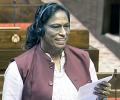
The International Olympic Committee (IOC) has expressed strong disappointment over the ongoing disputes surrounding the Indian Olympic Association (IOA) elections. The IOC warned that the "extremely regrettable situation" is damaging the reputation of India's Olympic movement. This comes after IOA President P T Usha alleged manipulation in the election process. The IOC has urged for a free, fair, and externally uninfluenced election, especially as India bids to host the 2036 Olympics.

Activists Prashant Bhushan, Anjali Bharadwaj, Yogendra Yadav, and Neha Bora have raised serious questions about the Election Commission's decision-making process for the nationwide Special Intensive Revision (SIR) of electoral rolls. They allege contradictions in the EC's statements, lack of transparency regarding decisions, concerns over centralisation of the electoral database, and unauthorised changes to Form 6, calling for greater accountability and disclosure of records.

The Chief Electoral Officer of Uttar Pradesh has strongly denied media reports alleging irregularities in the addition of 16.18 lakh voters during the Special Intensive Revision (SIR). The CEO asserted that the process was conducted with "utmost transparency" and in strict adherence to electoral laws and ECI instructions, clarifying the collection and processing of Form-6 applications.

CJP founder Abhijeet Dipke, YouTuber Dhruv Rathee, and actor-activist Prakash Raj joined a protest in Bengaluru, demanding the scrapping of the electoral roll revision exercise and the resignation of Chief Election Commissioner Gyanesh Kumar, alleging widespread voter deletion aimed at disenfranchising specific groups.

BJP veteran Murli Manohar Joshi emphasized the importance of fair elections, transparent bureaucracy, and constitutional adherence for a functioning democracy. His comments come amidst opposition protests led by the INDIA bloc, alleging irregularities in electoral roll revisions and demanding the Chief Election Commissioner's resignation.

The Supreme Court clarified on Wednesday that it has not yet made a final ruling on the legality of the Election Commission's "logical discrepancy" category used for scrutinising voter details during the Special Intensive Revision of electoral rolls. The court noted that its previous permission for this exercise in West Bengal was only an interim arrangement and its Bihar SIR decision was not a final determination of all related issues.

Three BJP allies, including LJP (Ram Vilas), TDP, and RLM, have called on the Election Commission for a clearer explanation regarding concerns raised by two Election Commissioners over the voter list revision process. Union Minister Chirag Paswan warned that public faith in elections was at stake, while the EC asserted that differing views among its members were normal and final decisions were unanimous.

The Haryana Congress has strongly criticised the BJP government's two-year tenure in the state, alleging widespread misgovernance, unfulfilled election promises, a surge in crime, and rampant corruption. Senior Congress leaders, including Bhupinder Singh Hooda and Kumari Selja, highlighted issues faced by farmers, traders, and youth, demanding accountability and a white paper on the government's performance.
The Election Commission has launched a special drive to include eligible citizens who were omitted or deleted during the recent Special Investigative Review (SIR) exercise, as well as to register new and young voters. This initiative follows accusations from opposition parties regarding disenfranchisement and aims to ensure no eligible citizen is left out of the electoral process.

Thousands of protesters, including farmers, trade unionists, students, and Left party members, marched towards the Election Commission of India headquarters in Delhi, demanding the resignation of Chief Election Commissioner Gyanesh Kumar and the withdrawal of the ongoing Special Intensive Revision (SIR) of electoral rolls, alleging 'vote chori' and exclusion of eligible citizens.

The Supreme Court is set to hear a plea filed by Congress leader Rahul Gandhi and other opposition figures on Thursday regarding alleged large-scale voter deletions and irregularities in the Special Intensive Revision of electoral rolls. The petition seeks an independent audit of these deletions and modifications, and a direction to prevent further deletions without due process.
The Election Commission has directed five states - Goa, Manipur, Punjab, Uttar Pradesh, and Uttarakhand - to transfer officers involved in election work ahead of the 2027 assembly polls. This move, a standard practice for fair elections, targets officers in their home districts or those completing three years in a district by May 2027, covering various administrative and police roles.
The Supreme Court will hear a plea on October 28 regarding the Special Intensive Revision (SIR) of Delhi's electoral roll. Petitioners seek transparency from the Election Commission on voter deletion reasons and a simplified re-inclusion process for those omitted, especially concerning Form 6. The court had previously raised concerns about "mechanical" notice issuance during the SIR, which led to 47 lakh voter deletions in Delhi.

The Cockroach Janta Party (CJP) organised a protest in Mumbai, demanding the resignation of Chief Election Commissioner Gyanesh Kumar, despite police denying permission. The protest stems from alleged objections by other Election Commissioners regarding electoral roll decisions, though the Election Commission clarified all decisions were unanimous. Security forces were heavily deployed around Shivaji Park to manage the situation.

It is too early to judge whether the CJP will become a consequential political movement or remain a moment of protest. Its significance will depend less on the size of crowds or the reach of online campaigns than on what follows when the initial excitement subsides, notes Manoj Mohanka.

NCP (SP) leader Supriya Sule has alleged that the BJP is using pens fitted with spy cameras to record voters in the Maharashtra MLC polls for Pune Teachers' and Graduates' constituencies. She claimed voters were offered money to record their votes for BJP candidates. Chief Minister Devendra Fadnavis stated he was unaware of such devices. Sule has urged the Election Commission to investigate these serious complaints.

Hockey India has issued a show-cause notice to the Hockey Association of Odisha (HAO), threatening to reclassify it from a permanent to an associate member due to alleged non-compliance with federation bye-laws. The notice follows an adverse report that stalled HAO's elections, citing serious deficiencies in its district units, including unelected administrative officials holding key posts and a lack of proper election documentation. HAO has two weeks to respond.

Union Minister Rajnath Singh has accused the Congress and its allies of attempting to instigate a 'Bangladesh-like regime change' in India, leveraging youth energy for political confrontation and anarchy, rather than constructive nation-building.

Maharashtra's Chief Electoral Officer has formally requested the Election Commission to modify the ECINet software, seeking greater discretion for Electoral Registration Officers in addressing over 2 crore voter discrepancies.

AISA president Neha Bora appeared before a special executive magistrate after the Delhi High Court dismissed her challenge to a police notice requiring a Rs 10,000 "peace bond." Bora refuses to sign the bond, alleging it's used to curb democratic dissent, while the court has directed authorities to provide her with all material supporting the allegations by October 29.

A group of 124 former IAS, IFS, IPS, and allied services officers have issued an open letter defending the Election Commission (EC) and the Special Intensive Revision (SIR) process. They argue that the electoral system cannot be deemed rigged only when a party loses, citing instances where the ruling BJP lost elections under the same EC. The officers highlight the legitimacy and necessity of the SIR for cleaning voter rolls and underscore the robust safeguards within India's electoral system.

'If you ask Prime Minister Modi prove you are Indian, as per the Election Commission's criteria, he may not be able to prove that he is an Indian.'

The AICF's proposed constitution could change the symbolism of its top office. The president may no longer remain merely the king on the chessboard -- important to the organisation but with limited reach -- and could become something closer to the queen, influencing internal governance, external representation and emergency decision-making.

The Indian Olympic Association (IOA) has announced that its new Executive Council will be elected on December 5, with Sanjay Kumar Srivastava appointed as the returning officer. The electoral process, which includes elections for the Athletes' Commission on November 3 and selection of Sportspersons of Merit (SOMs), will adhere to national sports governance acts and the amended IOA Constitution. The new council will serve a four-year term (2026-2030), with current President PT Usha highlighting the importance of good governance as India eyes hosting the 2036 Olympic Games.

Biennial polls for eight Bihar Legislative Council seats resulted in significant upsets, with five sitting MLCs, including from BJP and Congress, losing. The fledgling Jan Suraaj Party secured its first victory. BJP won three seats, Independents two, while RJD, Jan Suraaj, and JD(U) each secured one. The results highlighted infighting within the INDIA bloc and a strong performance by new political forces.

When it pretends to be deaf, a situation can snowball into something it cannot contain. The government cannot dismiss public anger merely because protests are inconvenient or politically embarrassing, asserts Ramesh Menon.
